
Wildlife Photography tips
Wildlife photography immerses you in the natural world, capturing the beauty, behavior, and essence of animals in their natural habitats. This genre requires patience, skill, and an understanding of both animal behavior and photography techniques to capture those fleeting moments that tell powerful stories. In this dedicated article, we’ll explore the art and challenges of wildlife photography, how to choose the right gear, and master the techniques needed to capture stunning, authentic images of animals in the wild.


Wildlife photography recommended gear
Wildlife photography usually demands specialized gear to capture animals in their natural habitats with precision and clarity, often from a distance. From powerful telephoto lenses that bring distant subjects into sharp focus, to durable camera bodies and tripods built for the outdoors. Having the right equipment is essential for capturing stunning wildlife images.
Camera
When it comes to wildlife photography, choosing the right camera can make all the difference in capturing fast-moving animals and distant subjects with precision. For this genre, it's recommended to use cameras with fast autofocus systems that have the ability to track and detect face and eyes, high continuous shooting speeds, and excellent low-light performance. Full-frame DSLRs and mirrorless cameras are ideal due to their superior image quality and ability to handle high ISO settings in challenging lighting conditions. Popular choices among wildlife photographers include the Canon EOS R5, Nikon Z9, and Sony Alpha A1, all of which offer excellent autofocus tracking and high frame rates to help you capture sharp, detailed wildlife shots.
Telephoto lens for Wildlife Photography
Are the most common choice in wildlife photography as they allow photographers to capture animals from a safe distance without disturbing their natural behavior. These lenses provide a narrow field of view and high magnification, making it easier to photograph elusive or dangerous animals while maintaining a safe distance. Additionally, telephoto lenses offer excellent background compression, helping to isolate the subject and create a beautifully blurred background (bokeh) that enhances the focus on the animal. Their long focal lengths also allow for sharp, detailed shots, even in wide, open environments, making them indispensable for capturing wildlife in dynamic and unpredictable situations. There is a wide choice of lenses you can choose according to your needs and budget. The recommended focal length is usually 200mm and above.

A Telephoto shot of giraffes in Tanzania.
Wide angle lens
Offer unique perspective in wildlife photography by allowing photographers to capture animals within the broader context of their environment. These lenses excel at creating dramatic, immersive shots that show not only the wildlife but also the landscapes and surroundings, giving a sense of scale and storytelling to the image. They also provide greater depth of field, keeping more of the scene in focus, which is ideal for capturing intricate environmental details along with the subject. Keep in mind that many animals are hard and or dangerous to get close to with a wide angle lens. Using wide angle lenses will require a deep understanding of animal behavior and safety.

A wide angle shot of an elephant in Kenya.
tripod
Using a tripod in wildlife photography offers both advantages and disadvantages. The primary advantage is stability. Tripods help eliminate camera shake, especially when using long telephoto lenses or shooting in low light conditions, allowing for sharper images. They are particularly useful for long waiting periods when photographing elusive wildlife, as they reduce hand fatigue and allow for precise framing. However, tripods can also be cumbersome and limit mobility, making it harder to quickly reposition for spontaneous action shots. In fast-paced situations, such as capturing birds in flight or animals on the move, the extra setup time may cause missed opportunities.
Wildlife photography technique
Wildlife photography requires a combination of technical skills. From mastering fast shutter speeds to freezing motion, quickly adjusting exposure to changing ambient light, to using precise focus techniques for sharp images. Wildlife photography challenges photographers to adapt quickly to unpredictable situations.
Shutter speed in Wildlife Photography
Using the right shutter speed is essential for capturing sharp, dynamic images of animals in motion. It is the first consideration I pay attentions to. The basic rule is that the minimal shutter speed has to be 1/focal length. A fast shutter speed, typically 1/1000s or higher, is recommended for freezing action, such as birds in flight or animals running, ensuring that movement is captured with clarity and without blur. Very fast moving animals like a running cheetah of hummingbird in flight will even require speeds of 1/2500 or higher. However, in calmer scenes or when photographing slower animals, a slightly slower shutter speed can be used to allow more light into the shot, especially in low-light conditions. Balancing shutter speed with proper ISO and aperture settings will help ensure crisp, well-exposed wildlife images in various environments.

Cheetah in pursuit, shot with a shutter speed of 1/2500.
Aperture
Plays a crucial role in wildlife photography by controlling both the depth of field and the amount of light entering the camera. A wide aperture (low f-stop, such as f/2.8 or f/4) is usually recommended. A wide aperture allows more light to enter the camera (compansating for using fast shutter speed), isolates the subject from the background, creating a beautiful, soft bokeh effect that draws attention to the animal. However, in situations where you want more of the scene in focus, such as when photographing an animal in its natural habitat, a narrower aperture (higher f-stop, like f/8 or f/11) can be used to create more sharpness throughout the image.

cliff springer in Tanzania, shot with an F/6.3 aperture (widest of the lens)
ISO
The ISO will be determined depending on the ambient light, shutter speed and aperture used. Lower ISO (around 100-400) is ideal for bright environments, ensuring clean, noise-free images. However, in situations where lighting is limited, such as early mornings or dusk, or when you need a fast shutter speed to freeze movement, raising the ISO (800-3200 or higher) becomes necessary. While higher ISO levels can introduce some noise, modern cameras and especially with full-frame sensors often handle this well, and it’s a worthwhile trade-off for capturing sharp, well-exposed wildlife images.
Exposure mode in Wildlife Photography
Considering the above settings of shutter speed, aperture and ISO - my personal recommendation is to use Manual exposure mode with automatic ISO. Manual mode will allow you to set and increase or decrease the shutter speed according to needs (static or moving scene), set a wide aperture for most situations and the automatic ISO will simply balance the exposure. This is my personal favorite exposure mode and I find it very effective and fast to handle. However, every person has its own preferences. If a different exposure mode works well for you and allows you a better and faster control of the exposure then use it.
Exposure compensation
Depending on your camera, I would advise to set a button or another control that will allow you to quickly adjust the exposure compensation. It is very important in situations where the subject and background, or the general scene has different lighting.

Lioness in Tanzania, shot with underexposure to avoid burnt areas on the right side of the lioness which was significantly brighter than other areas.
Focus method in Wildlife Photography
A basic set up for both DSLR and mirrorless cameras is the choice between single shot (AF-S) or continuous autofocus (AF-C). For stationary subjects, single-shot autofocus works well, ensuring sharp focus on a still subject. Continuous autofocus (AF-C) tracks moving subjects and adjusts focus in real-time and is highly recommended for photographing wildlife in action, like birds in flight or running animals. Some photographers prefer using continuous autofocus for all situations, but I recommend you to test your camera and see how it works for you.
Focus points/selection
For DSLR cameras I recommend using a single AF point for stationary subjects and a focus point extension (5/7/9 points depending on you camera) for moving subjects. For Mirrorless cameras, the best choice is to use the automatic face/eye detection. It is a game changer in focus settings and dramatically increases focus accuracy compared to the focus points in DSLRs.

stationary scene shot with single shot focus

Action scene shot with continuous autofocus
Wildlife photography composition guidelines
Composition is key to creating impactful wildlife photographs that not only showcase animals but also tell a compelling visual story. In wildlife photography, how you frame your subject and utilize the environment can greatly enhance the emotional and aesthetic appeal of your images. Whether you’re aiming to capture intimate portraits or dynamic action shots, mastering composition will help you create more engaging and memorable wildlife photographs.
Rule of thirds and breathing space
Is a fundamental composition guideline that helps create balanced and visually appealing images. By dividing the frame into a 3x3 grid, you position your subject along the gridlines or at the intersection points, rather than centering it. This adds dynamic tension and also creates space to showcase the animal's view, environment or movement.

Eye Level in Wildlife Photography
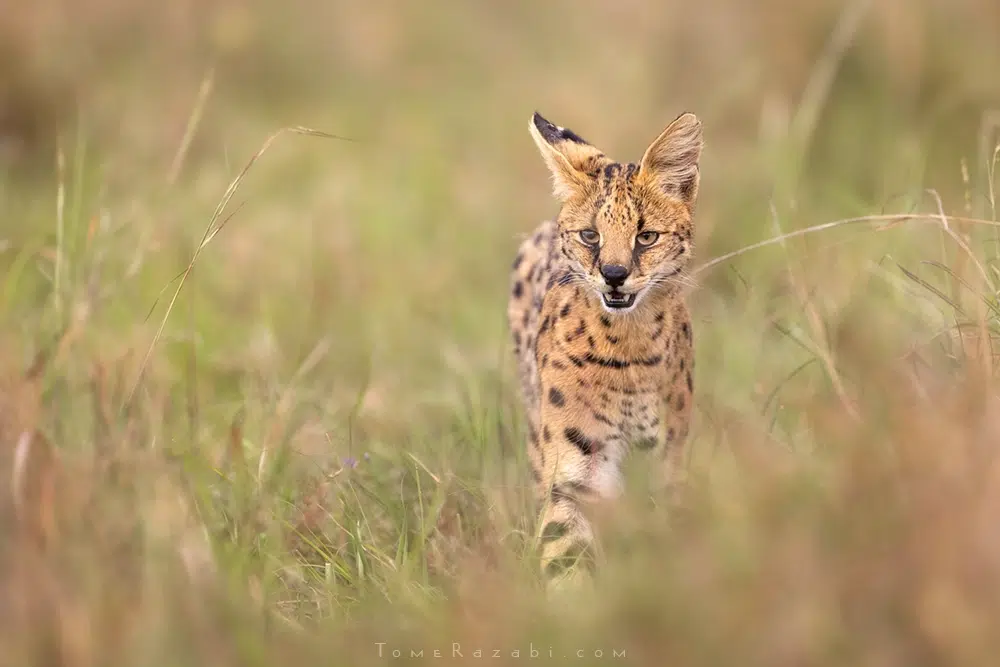
Photographing at eye level in wildlife photography creates a powerful connection between the viewer and the subject, making the image feel more intimate and engaging. By shooting at the animal’s eye level, rather than from above or below, you capture the world from their perspective, adding a sense of immersion and authenticity. Whether photographing large mammals or small creatures, getting down to their level helps convey a sense of equality and presence, drawing the viewer deeper into the scene.
Choose a good background
Choosing the right background is important for creating visually striking images that highlight the subject without distraction. A clean, blurred simple background helps the animal stand out, while also conveying a sense of its natural environment. Pay attention to colors, textures, and lighting in the background to avoid elements that may compete with or overpower your subject. A more detailed background that conveys the animal's environment can be equally powerful when chosen correctly.

A blurred background to highlight the subject

A more detailed background with environment
Characteristic body parts
Nearly every animal has a distinctive feature that defines its character - like the trunk of an elephant, the vibrant tail of a peacock, or the majestic antlers of a deer. These traits are integral to the animal’s identity and play a significant role in showcasing its personality. It's important to capture these defining characteristics in your photographs, as cropping them out can diminish the essence and uniqueness of the subject. However, don't be afraid to experiment and crop some scenes if it can create a powerful image.


Animal behavior in Wildlife Photography
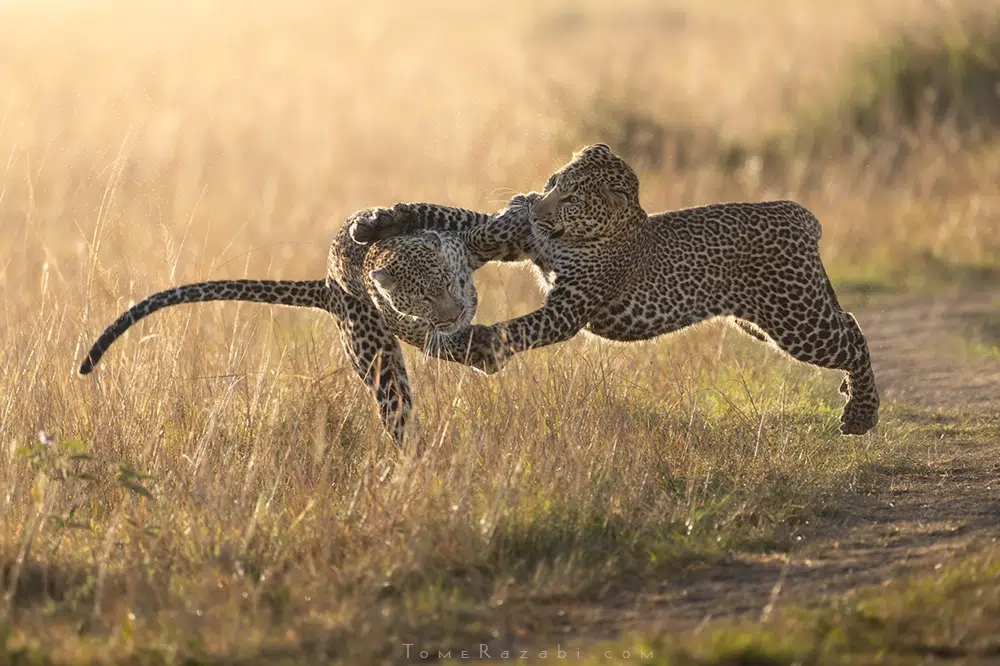
Showcasing animal behavior is the ultimate goal in wildlife photography, as it forms the heart of the story - telling the tale of animals and their way of life. While mastering basic techniques and composition makes it easier to capture good shots, capturing genuine animal behavior requires a deeper level of dedication, knowledge, and patience. The first step is to study your subject, understanding its habitat, feeding habits, courtship rituals, and activity times. Once you’re familiar with these aspects, you'll be better prepared to anticipate and capture fascinating moments that truly reflect the essence of the animal’s life.



wildlife photography destination
The best wildlife photography destinations offer incredible opportunities to capture diverse species in their natural habitats, from the savannas of Africa to the rainforests of South America. Iconic locations like the Serengeti in Tanzania, home to the "Big Five," provide unmatched chances to photograph large mammals, while places like Costa Rica offer a rich array of birdlife, reptiles, and amphibians. In contrast, the Arctic regions, with their polar bears and arctic foxes, present unique opportunities for capturing wildlife in extreme environments. These destinations not only provide a variety of species but also stunning landscapes that enhance the overall wildlife photography experience.
Kenya Wildlife Photography
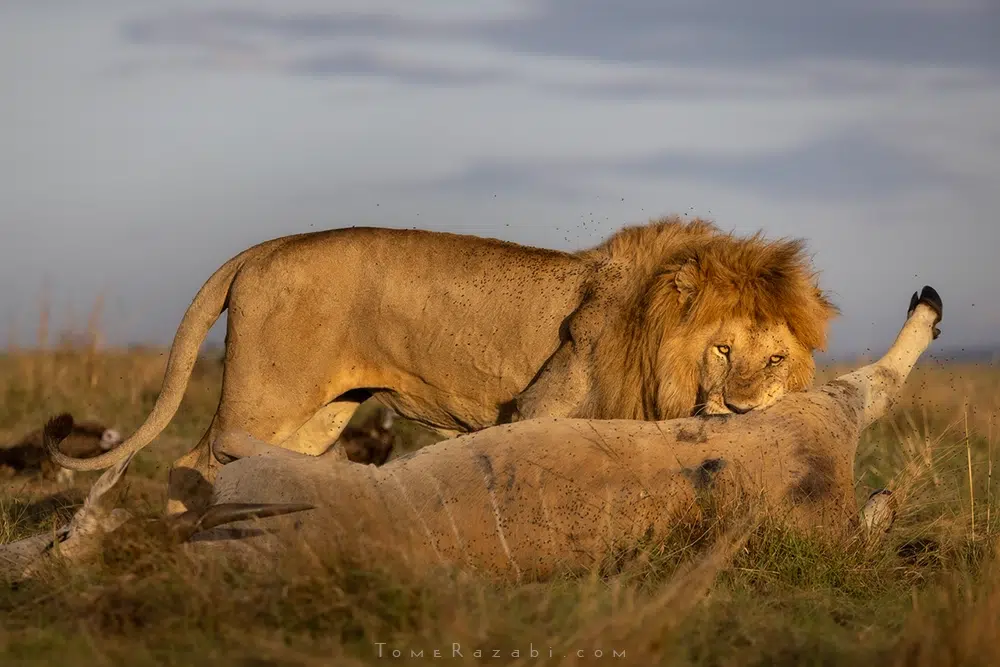
Kenya is a top wildlife photography destination, with the Masai Mara and Amboseli National Parks offering some of the most iconic settings for capturing Africa’s incredible wildlife. The Masai Mara is famous for its dramatic Great Migration, where millions of wildebeest, zebras, and predators like lions and cheetahs create dynamic, action-packed scenes. Amboseli, on the other hand, is known for its breathtaking views of Mount Kilimanjaro and large elephant herds, providing photographers with stunning backdrops and up-close encounters with these majestic animals. Both parks offer diverse wildlife, unique landscapes, and exceptional opportunities for capturing the beauty of Africa's wildlife.


Tanzania
Is also a premier wildlife photography destination, with the Serengeti and Ngorongoro Crater offering unparalleled opportunities to capture amazing African wildlife photos. The Serengeti is renowned for its vast plains and the awe-inspiring Great Migration, where millions of wildebeest, zebras, and predators roam, providing dramatic and dynamic photo opportunities. Ngorongoro Crater, a UNESCO World Heritage site, is a natural haven for a wide variety of species, including lions, elephants, and rhinos, all set against the stunning backdrop of the crater’s lush, green landscape. These iconic locations make Tanzania a must-visit for wildlife photographers seeking breathtaking shots.


Namibia Wildlife Photography
A unique wildlife photography destination, offering a diverse range of environments and species in locations like Etosha National Park, Sossusvlei, and Cape Cross. Etosha is known for its vast salt pans and waterholes, attracting large herds of elephants, lions, and zebras, making it an ideal spot for capturing dramatic wildlife scenes. Sossusvlei, with its iconic red dunes, provides a stunning backgrounds for wildlife and landscape photography, showcasing oryx and other desert-adapted species against the surreal landscapes of Namibia. Cape Cross, famous for its massive Cape fur seal colony, offers photographers a chance to capture fascinating marine wildlife in action along the rugged Atlantic coast. Namibia's desert rivers, such as the Hoanib, offer a truly unique wildlife photography experience, showcasing the remarkable resilience of desert-adapted species. Flowing through the arid landscapes of the Skeleton Coast, the Hoanib River is a lifeline for animals like desert elephants, giraffes, lions, and hyenas, creating a striking contrast between the dry, harsh terrain and the vibrant wildlife it sustains.


Botswana
Offers unparalleled opportunities in iconic locations like the Okavango Delta, Moremi Game Reserve, Chobe National Park, and the Kgalagadi Transfrontier Park. The Okavango Delta’s lush waterways attract diverse wildlife, including elephants, hippos, and rare birds, providing stunning scenes of animals in a dynamic wetland landscape. Moremi is known for its rich biodiversity, from big cats to antelope, making it a hotspot for action-packed photography. Chobe is famous for its large elephant herds and diverse species along the Chobe River, offering incredible water-based photography. Lastly, the Kgalagadi, with its semi-arid desert setting, offers unique opportunities to capture desert predators like lions and cheetahs against strikingly barren landscapes.


Ethiopia
Ethiopia offers wildlife photographers a chance to capture some of the world’s rarest and most unique species, with the highlands home to the iconic Gelada monkeys and the elusive Ethiopian wolf. Gelada monkeys, often called "bleeding-heart baboons," are found in the Simien Mountains, where photographers can capture their expressive faces, complex social behaviors, and stunning backdrop of jagged cliffs. The Ethiopian wolf, Africa’s most endangered carnivore, roams the Bale Mountains, offering rare opportunities for wildlife photographers to document this beautiful, red-furred predator in its rugged, alpine habitat.
Uganda
Is a wildlife photographer’s paradise, particularly for those seeking intimate encounters with great apes like mountain gorillas and chimpanzees. In the misty forests of Bwindi Impenetrable National Park, photographers can capture breathtaking images of mountain gorillas, one of the most endangered and majestic animals on the planet. These close encounters offer rare opportunities to photograph gorillas in their natural habitat, from playful juveniles to powerful silverbacks. In Kibale National Park, home to the largest population of chimpanzees, photographers can document the dynamic behaviors and expressive faces of our closest relatives in the animal kingdom. Uganda has other safari parks like queen Elizabeth and Murchison Falls national parks with descent wildlife diversity, but they are not as good as the safari you will find in Kenya and Tanzania.
Equatorial America (Costa Rica, Panama, Ecuador, Columbia)
Costa Rica, Panama, Ecuador, and Colombia are exceptional wildlife photography destinations, offering rich rainforests teeming with iconic species. In these biodiverse regions, photographers can capture stunning images of animals like the vibrant red-eyed tree frog, playful capuchin monkeys, and the elusive jaguar. These countries are also home to a dazzling variety of birds, including the resplendent quetzal, humming birds and colorful toucans, making them prime locations for bird photography. Sloths, howler monkeys, and poison dart frogs further add to the photographic appeal. With their lush, dense rainforests and unique wildlife, these countries provide unparalleled opportunities for capturing the essence of tropical biodiversity.


Brazil
Brazil is a premier wildlife photography destination, especially for those looking to capture two of its most iconic animals - jaguars and giant otters. In the Pantanal, the world’s largest tropical wetland, photographers can observe jaguars prowling along riverbanks, often providing rare and thrilling photo opportunities of these majestic big cats in their natural habitat. The region is also home to giant otters, playful and highly social animals that are often seen hunting in family groups. These two species, along with the huge Amazon rain forest and Pantanal's diverse wildlife and breathtaking landscapes, make Brazil a must-visit for any wildlife photographer.
Patagonia Wildlife Photography
A remarkable wildlife photography destination, offering dramatic landscapes and the chance to capture iconic species like pumas, orcas, and various whale species. In the rugged mountains and open plains of Torres del Paine national park, pumas (mountain lions) can be photographed as they hunt guanacos or move stealthily through the wilderness. Along the coastlines, photographers can witness orcas performing rare hunting techniques, such as intentional beaching to catch seals, offering truly unique photo opportunities. Patagonia is also a prime location for photographing southern right whales and humpback whales in their natural habitats.
USA and Alaska
The USA, particularly Alaska and Yellowstone National Park, offers amazing opportunities for wildlife photography, showcasing diverse ecosystems and iconic species. In Alaska, photographers can capture stunning images of brown bears fishing for salmon in the picturesque rivers of Katmai National Park, where the bears' powerful presence against the backdrop of pristine wilderness creates breathtaking scenes. Additionally, the coastal waters provide chances to photograph humpback whales and orcas as they breach and feed, delivering awe-inspiring moments for any wildlife enthusiast. Meanwhile, Yellowstone National Park is home to a variety of wildlife, including bison, elk, and wolves, set against dramatic landscapes and geothermal features.
Canada
Renowned for its stunning landscapes and diverse wildlife, including brown bears, whales, polar bears, and arctic wolves. In British Columbia, photographers can capture majestic brown bears in their natural habitat, particularly during the salmon runs when they gather along rivers to fish. The coastal waters offer remarkable opportunities to photograph humpback whales and orcas as they breach and feed, providing thrilling action shots. Farther north, the polar bears of Manitoba’s Hudson Bay present unique chances to document these iconic Arctic mammals as they navigate their icy environment. Additionally, the elusive arctic wolf, often found in the remote tundras, adds an element of intrigue and adventure for photographers seeking to capture the beauty of Canada’s wild landscapes and its extraordinary inhabitants.


Spitsbergen and Svalbard Wildlife Photography
Are extraordinary wildlife photography destination, renowned for its breathtaking Arctic landscapes and rich biodiversity, particularly its polar bears, whales, seals, and seabirds. As one of the northernmost inhabited places on Earth, Svalbard provides photographers with unparalleled opportunities to capture polar bears in their natural habitat, often seen roaming the ice floes or hunting seals. The surrounding waters are home to various whale species, including orcas, beluga whales, blue whales, humpbacks and other species, offering stunning photographic moments as they breach and feed. Additionally, the archipelago boasts a wealth of marine life, with seals sunbathing on icebergs and a plethora of seabirds, such as puffins and guillemots, nesting on rugged cliffs.


Antarctica, South Georgia and Falkland Islands
Are all unparalleled wildlife photography destinations, renowned for their breathtaking landscapes and diverse species, particularly various penguin species, whale species, and the elusive leopard seal. In these frigid waters, photographers can capture iconic moments with penguins, including the majestic Emperor and the charming Gentoo, as they waddle, swim, and care for their young amidst stunning icy backdrops. The surrounding ocean is rich with marine life, offering incredible opportunities to photograph humpback whales, orcas, and blue whales as they breach and feed in the nutrient-rich waters. Additionally, the leopard seal, known for its striking appearance and unique hunting behavior, adds an element of intrigue to any photographic expedition. Together, these remarkable species and breathtaking landscapes make Antarctica, South Georgia, and the Falkland Islands a dream destination for wildlife photographers seeking to capture the raw beauty of the Southern Ocean.
India
Is a vibrant wildlife photography destination, renowned for its diverse ecosystems and the chance to capture some of the world's most iconic animals, including tigers, snow leopards, and numerous other species. The majestic Bengal tiger, found in renowned reserves like Ranthambore and Jim Corbett, offers photographers the thrilling opportunity to document these elusive big cats in their natural habitat. In the high-altitude landscapes of the Himalayas, the rare snow leopard presents a captivating subject against stunning mountainous backdrops, providing a unique challenge for wildlife photographers. Additionally, India is home to a wealth of other remarkable species, such as Asiatic lions, Indian elephants, and various exotic birds, making it a must-visit destination for those eager to capture the beauty and diversity of Indian wildlife.
The great Barrier reef
A premier marine wildlife photography destination, renowned for its vibrant ecosystems and stunning underwater landscapes. As the world's largest coral reef system, it offers photographers the opportunity to capture a breathtaking array of marine life, from colorful coral formations to diverse fish species, including clownfish, parrotfish, and reef sharks. The clear, azure waters provide excellent visibility, making it ideal for underwater photography, while the surrounding islands and sandy beaches add picturesque backdrops. Photographers can also encounter larger marine creatures, such as sea turtles and dolphins, as they explore this UNESCO World Heritage site.
Galapagos Islands
The Galapagos Islands are a wildlife photography paradise, celebrated for their remarkable biodiversity and unique species found nowhere else on Earth. This archipelago offers photographers unparalleled opportunities to capture iconic animals such as the giant tortoise, marine iguana, and blue-footed booby, all of which showcase the extraordinary evolutionary adaptations that have taken place in this remote ecosystem. The islands' diverse habitats, from volcanic landscapes to lush mangroves, provide stunning backdrops for photography, while the rich marine life, including sea lions and vibrant tropical fish, adds to the visual spectacle. With minimal human interference and a commitment to conservation, the Galapagos Islands allow wildlife photographers to document these incredible animals in their natural habitats, making it an unforgettable destination for nature enthusiasts.
conclusions
Wildlife photography is not only a powerful means of artistic expression but also a vital tool for raising awareness about the beauty and fragility of our planet’s diverse ecosystems. By capturing the unique behaviors, habitats, and interactions of wildlife, photographers play a crucial role in promoting conservation efforts and fostering a deeper appreciation for the natural world. Whether you're a seasoned professional or an aspiring enthusiast, the journey of wildlife photography invites you to explore breathtaking landscapes and connect with fascinating creatures. As you embark on this exciting adventure, remember that patience, respect for wildlife, and a commitment to ethical practices are essential in creating impactful images that inspire others to protect our planet’s precious wildlife for generations to come.

Follow me on


